
Lelemama Residency: Week 3
August 21, 2025
Lelemama Residency: Week 4
August 22, 2025Lelemama Residency: Week 3
August 21, 2025Lelemama Residency: Week 4
August 22, 2025NITAKUJENGEA KINYUMBA NA VIKUTA VYA KUPITIA(a home for you I will create with exit pathways)
Pathway II: What the soil gave us (A curatorial project)
I
A Gut Feeling
Creating and maintaining a space, a foundation, from where to derive a sense of belonging is a complex undertaking that intertwines both personal and political dimensions. As I contemplate my decision to pursue a PhD in Austria—a choice marked by both voluntary determination and involuntary separation from my home country, along with that of my children (who, to a large extent, did not have a say in the decision)—a reflection is prompted… one that questions what it truly means to establish and maintain a connection to a place—a foundation that serves as a nourishing ground for the roots of belonging.
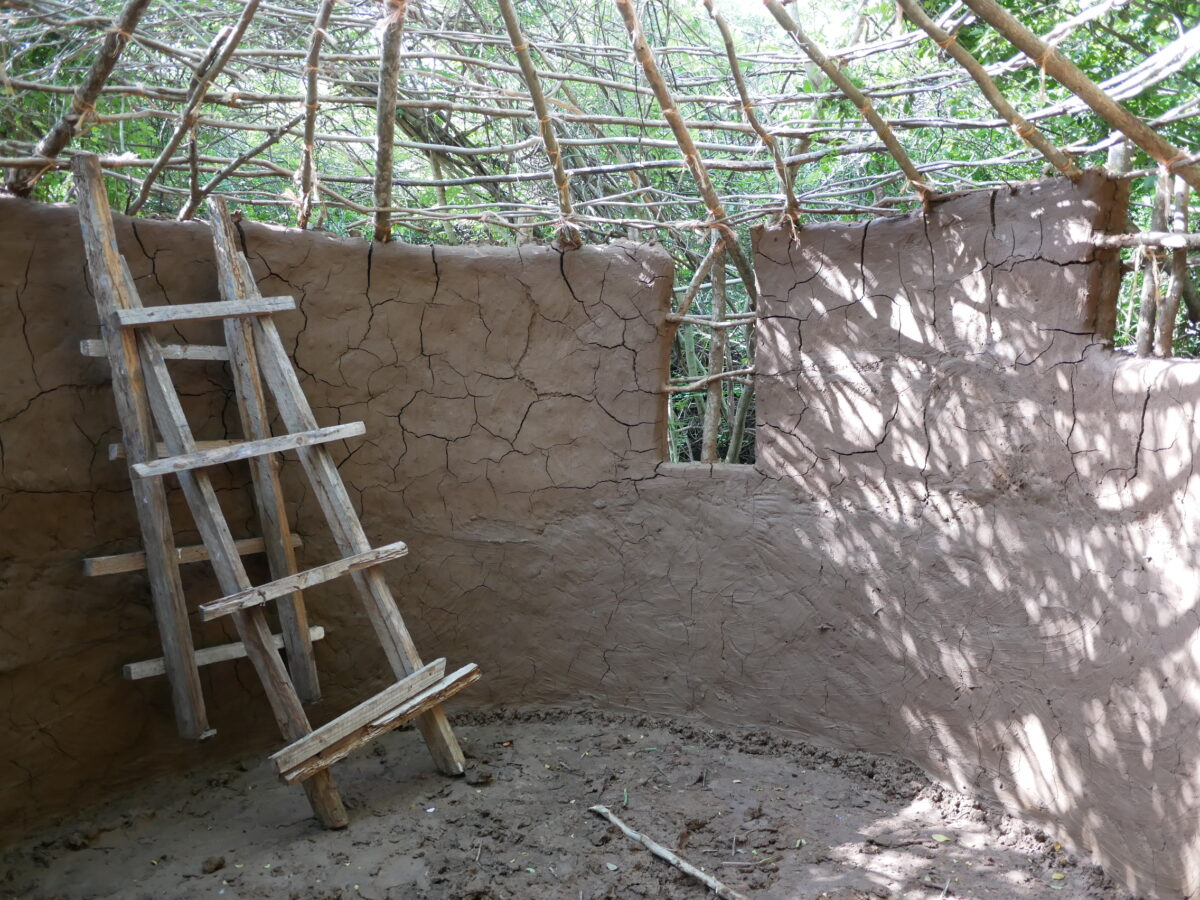
For this pathway, I wanted to explore, as a departure point, this ‘nagging’ feeling in my gut that is always a reminder of how far away I am from ‘home’—this sense of unsettlement, which always leaves me suspended between feelings of nostalgia and utopia, a desire for a familiar geographical situatedness, a ‘gut feeling.’ I find myself wondering whether this is a typical affective valence connected to migration and exile, and whether there is any connection between such complex emotional entanglements and (greater) history.
I am reminded of Nankondo, my matrilineal ancestress five generations apart, whose life unfolded through a different background and fate. She faced involuntary displacement, believed to have been abducted and destined for a life of enslavement on the island of Zanzibar. Engaging in a dialogue with this history, and imagining the experiences of those who departed, severed from their bloodline and the safety of the spaces they called ‘home,’ I contemplate their constant reshaping and broadening of their notion of home, I also reflect on the resilience of those who remained, ceaselessly crafting homes—be they tangible or imaginary—in anticipation of the eventual return, any kind of return, of the departed.
II
An Inquiry
Can the idea of ‘(a) home’ be explored in an attempt to further negotiate this personal yet political place that I find myself in? But what is ‘(a) home’? and how can the traditional concept of ‘(a) home’ be challenged to encompass a more fluid yet stable status quo?
And,
How can we rethink our physical, emotional, and territorial relationships to this concept?
III
Bagamoyo
In Bagamoyo, an ancient Swahili coastal town situated within a 60km radius of Dar es Salaam, the commercial capital of my home country, Tanzania—there the air carries whispers of bygone tales, and the soil cradles imprints of many episodes in history. It is within this historical location that this chapter takes shape, nestled within a piece of land inherited from my late father, and guided by the architectural traditions passed down through the generations.
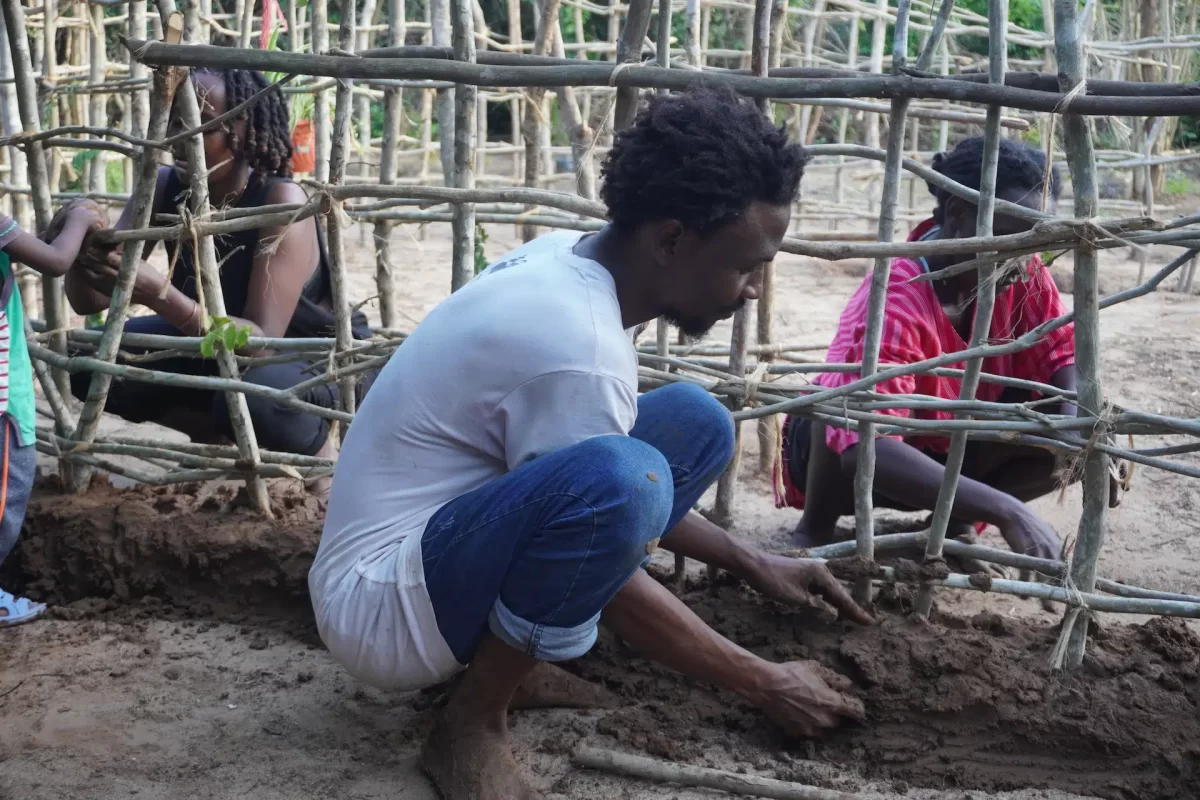
For this pathway, I set out to create a collaborative, and communal encounter with processes of building. Here, I invoke childhood memories of how we used to escape through mud play; soil became our refuge, a place where we built ideal imaginary worlds and envisioned futures not yet lived. I am also reminded of a handed-down traditions, whereby the practice of building a home involves transforming the building site into a space for togetherness—a space from which to create and/or recreate identities, to sharpen agency, and to preserve a sense of rootedness through (hi)storytelling and knowledge sharing.
Drawing from this background, paired with that of Nankondo, whose story reflects the vast expanse of the Indian Ocean, Bagamoyo gains deeper significance as a site for this chapter. Once poised to become the capital of German East Africa, this ancient Swahili town held sway as a crucial trading port along the East African coast—an entryway to Zanzibar and a nexus for the trade of ivory and slaves.
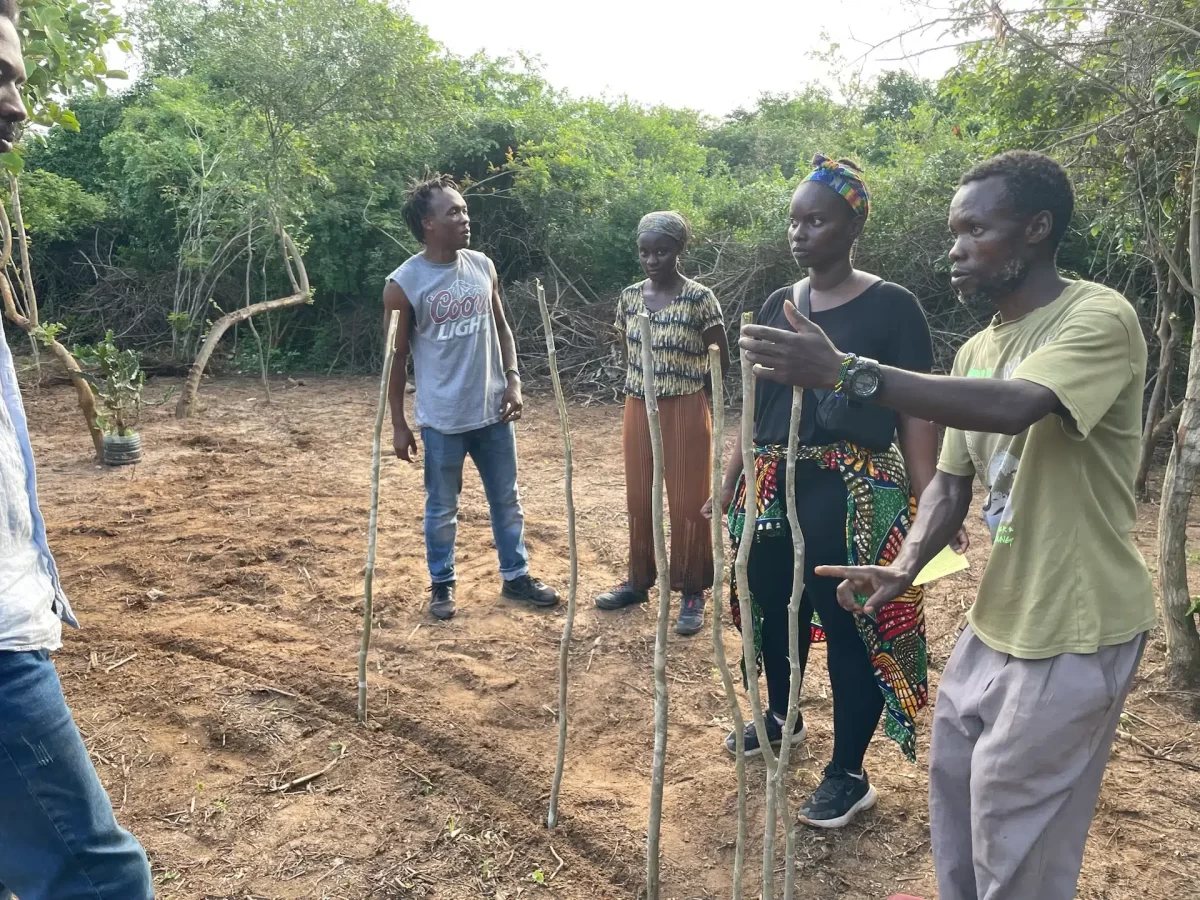
Nestling this pathway within this historical context, I intended for it to unfold through engagement in a dialogue with the living memories of the land and the expansive Indian Ocean. Serving as both an archive and a bridge, the ocean becomes a metaphorical passageway, connecting the exit pathways forged by the chapter—with those who arrived through the tumult of slavery, colonialism, urbanization, or monsoon winds, and those who departed to destinations unknown. The title for the project, ‘Nitakujengea kinyumba, na vikuta vya kupitia,’ echoes the poetic resonance of the Paukwa Pakawa curtain raiser in Swahili (hi)storytelling, loosely translating as ‘A home for you I will create, with exit pathways.’
IV
What the soil gave us
Seeking to make a creative contribution to the processes of understanding and re-membering knowledge systems dismembered throughout episodes of history, this pathway set out to create an intergenerational encounter—a space from where knowledges, such as the art of building a home, once employed as tools for survival via community building, can be re-activated and re-imagined.
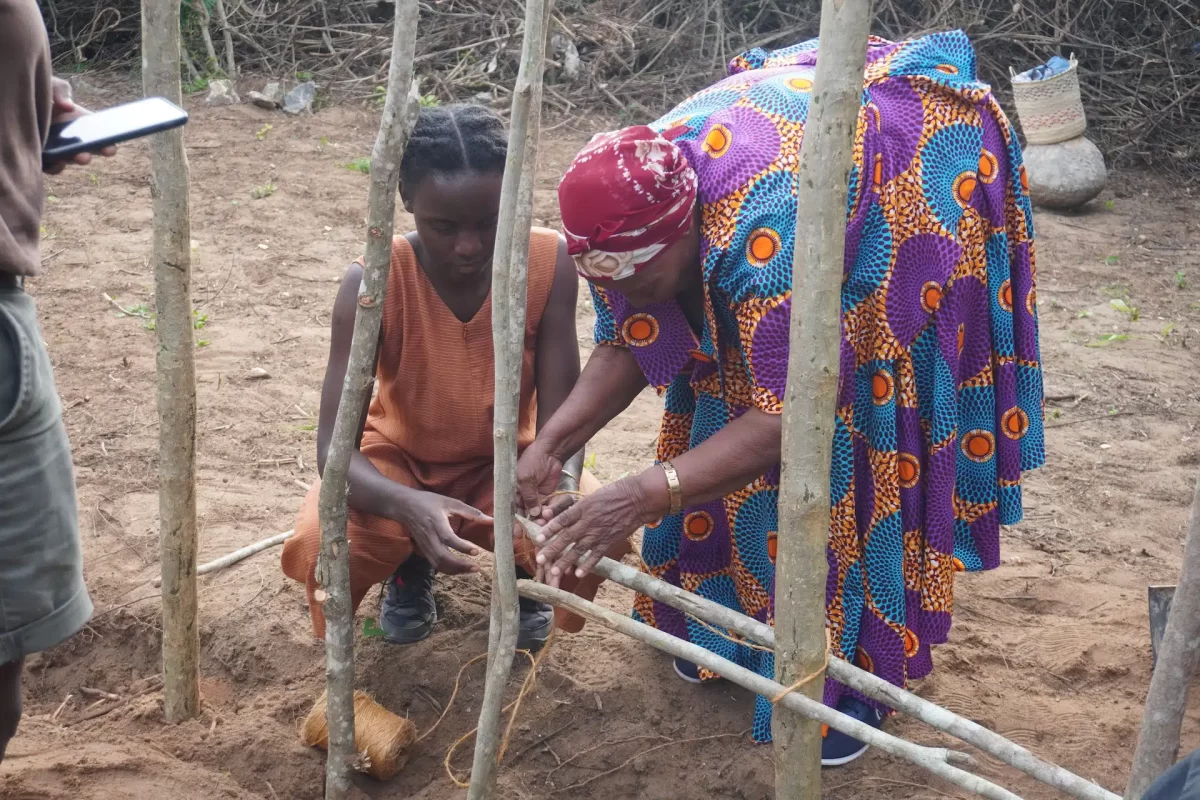
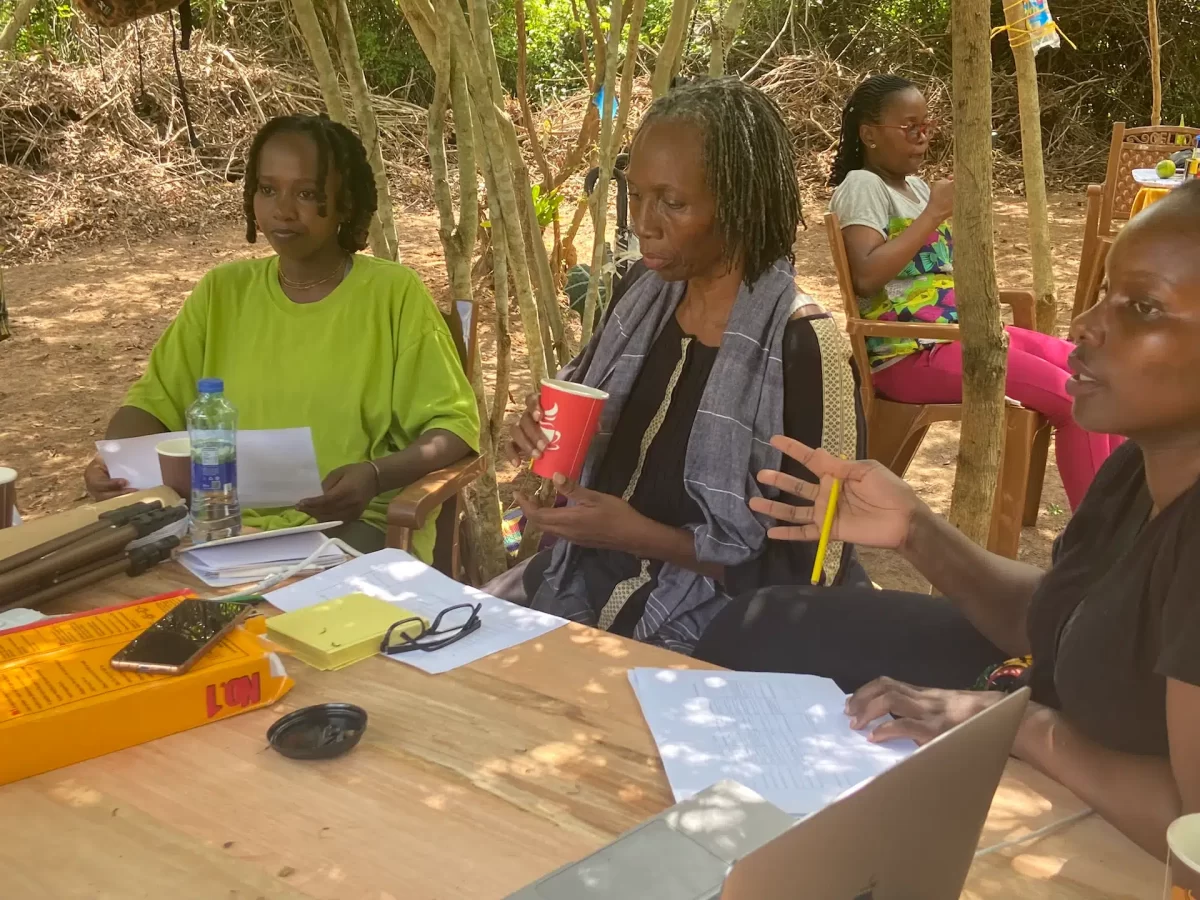
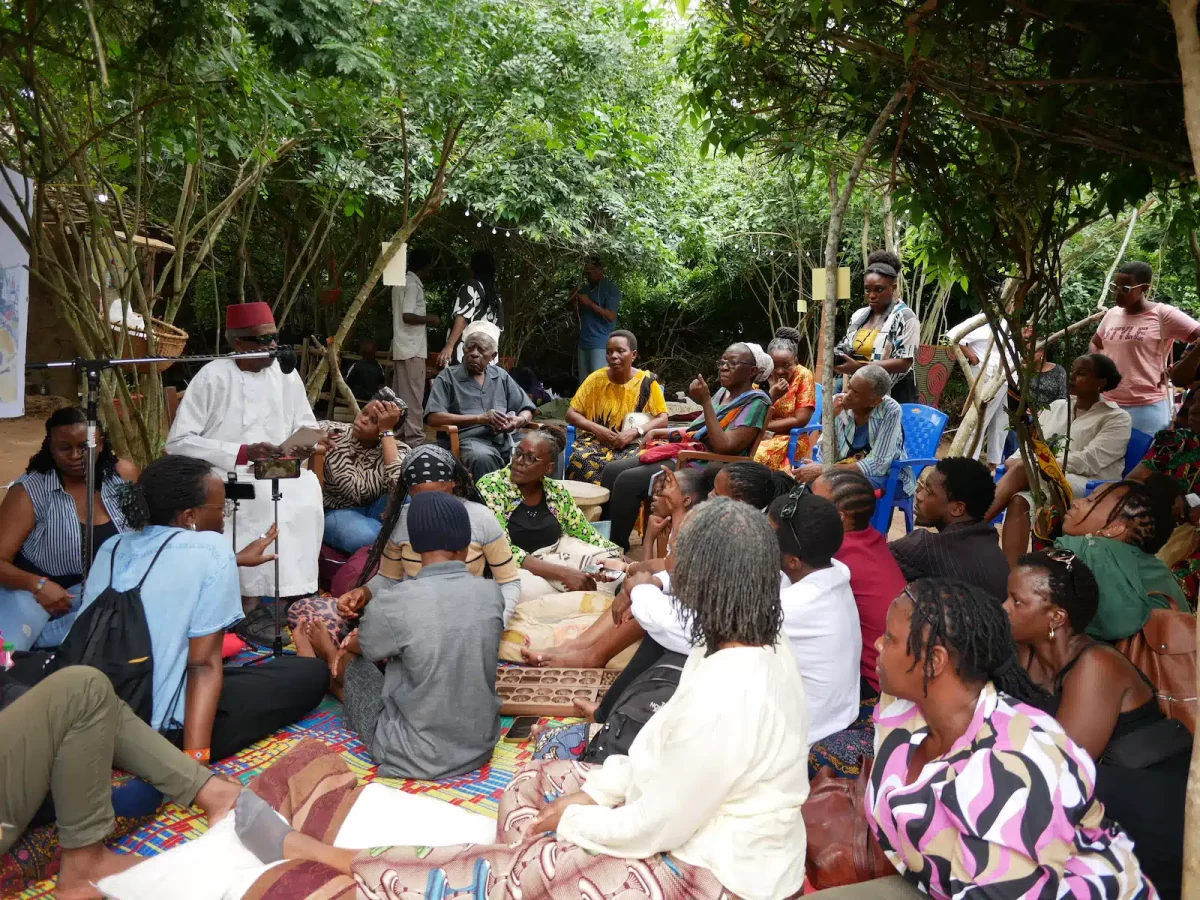
To facilitate this process, the pathway began with a series of workshops integrated into and around the building activities. Throughout the weeks, an impromptu art space took shape, ungoverned, with only the artists’ agency prevailing. The workshop curriculum facilitated the passing down of knowledge from intergenerational interlocutors to a younger generation of artists currently practicing in Tanzania. Spanning five weeks, each dedicated to a distinct facet of the project’s overarching objective, the curriculum unfolded with a structured approach. It commenced with a radio moment, a response to a weekly prompt provided to artists, followed by one-on-one interviews. Additionally, we engaged in conversations with invited matriarchs; the first two weeks featured my grandmother, Bibi Mkunde Aroni Mcharo, who emphasized community-centered ways of knowing. The third week invited a direct descendant of frontliners in the liberation movement of Tanzania, Marie Shaba, whose focus was on the memory of soil in the context of colonialism and liberation struggles. My mother, and co-curator for the chapter, Mama Demere Kitunga, served as the intergenerational interlocutor, facilitating and moderating these encounters.
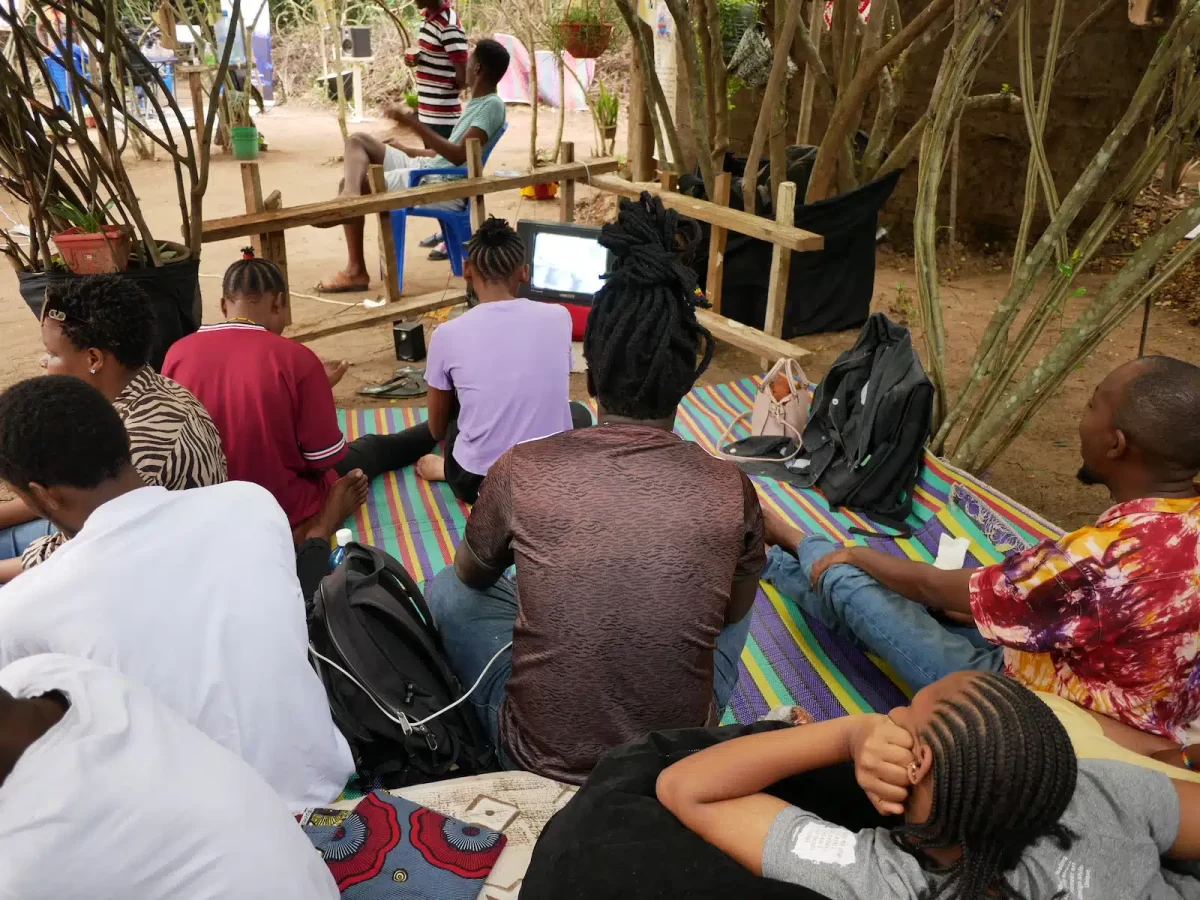
Following the intergenerational exchanges, our schedule included creative sessions encompassing various activities, such as building processes, practice sharing, and casual conversations. Other collaborators, like Jesse Gerald Mpango, were brought in to create textual documentation of our processes, and Mussa Sango from Boresha Radio managed radio documentation and production. The project also facilitated zine-making workshops in considering zine-making processes as a form of documentation.
V
5 Weeks
Week I – Shape/Form: The curriculum commenced with an exploration of shapes that govern our everyday navigation of spaces and communities. Participants engaged in prompt-based activities that required them to evaluate the prevalent shapes in their surroundings and question their significance. They then creatively designed alternative shapes for togetherness, later using these shapes to blueprint the loose structures that we would later build.
Week II – Mould: The second week delved into memory, where participants were prompted to reflect on objects that are significant to them. Working with clay and other molding materials, the participants were encouraged to engage in activities of molding and shaping, both physically and metaphorically, things that sustain and shape our lives and our communities, including personal pillars of support.
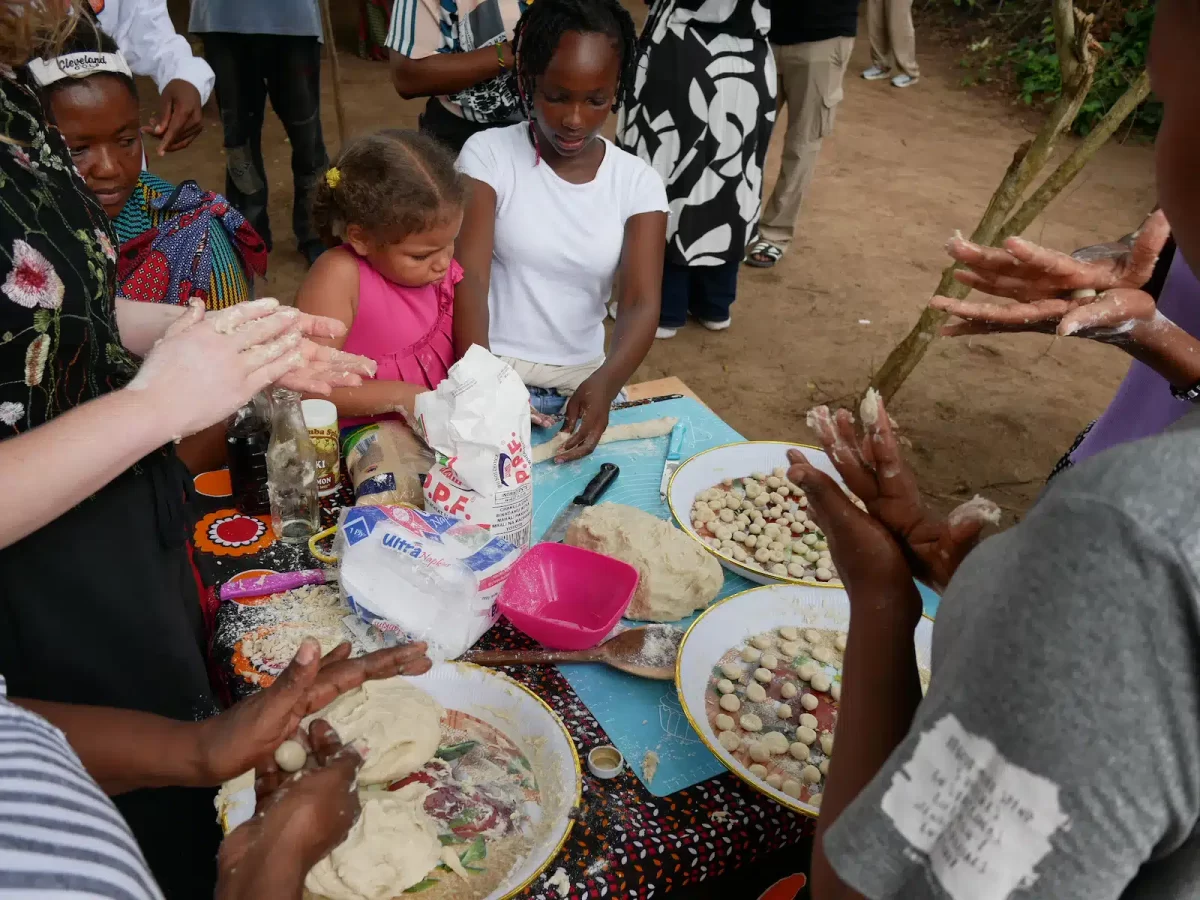
Week III – Fill: The third week involved knowledge exchange, mirroring the act of filling in. Drawing from the ubuntu ideology that everyone has relevant knowledge to share or worth sharing, participants were prompted to share and exchange their skills and expertise, fostering connections and a shared foundation for a knowledge pool within the group.
Week IV – Complete: The fourth week centered around narrative completion and contribution. Participants engaged in a call-and-response storytelling activity, mapping echoes or voices. This exercise created a shared narrative experience, forging a metaphorical bond between participants as they explored the sounds, voices, and stories that define personal and communal spaces.
Week V – Exit Pathways: The final week encompassed reflection and culmination. Participants engaged in radio production, offering reflections on their journey through the workshop series. This radio production provided a means to capture the lessons, experiences, and insights gained throughout the curriculum.
VI
Public program
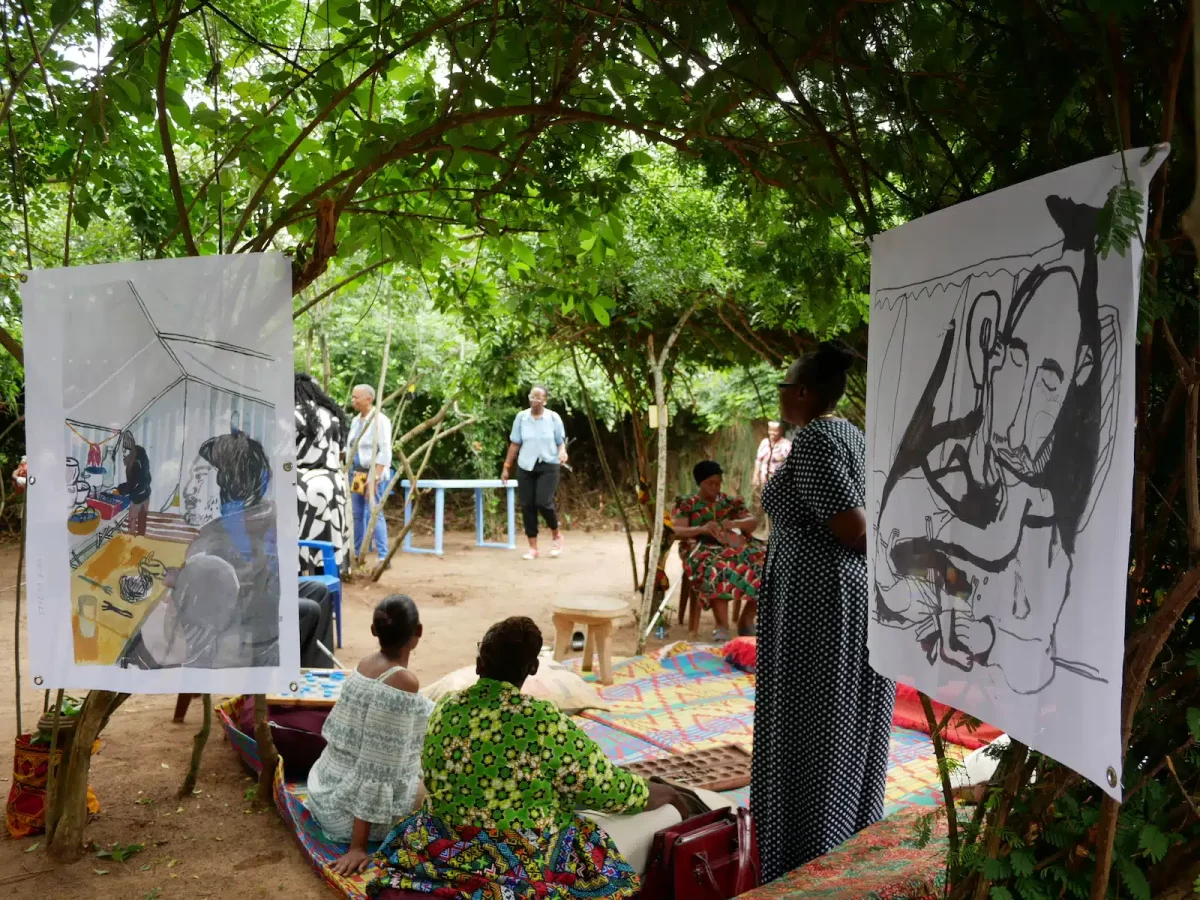
The culmination of the project was marked by a public program that brought together a diverse array of activities, hubs, performances, and artistic interventions, both within and around the erected structures.
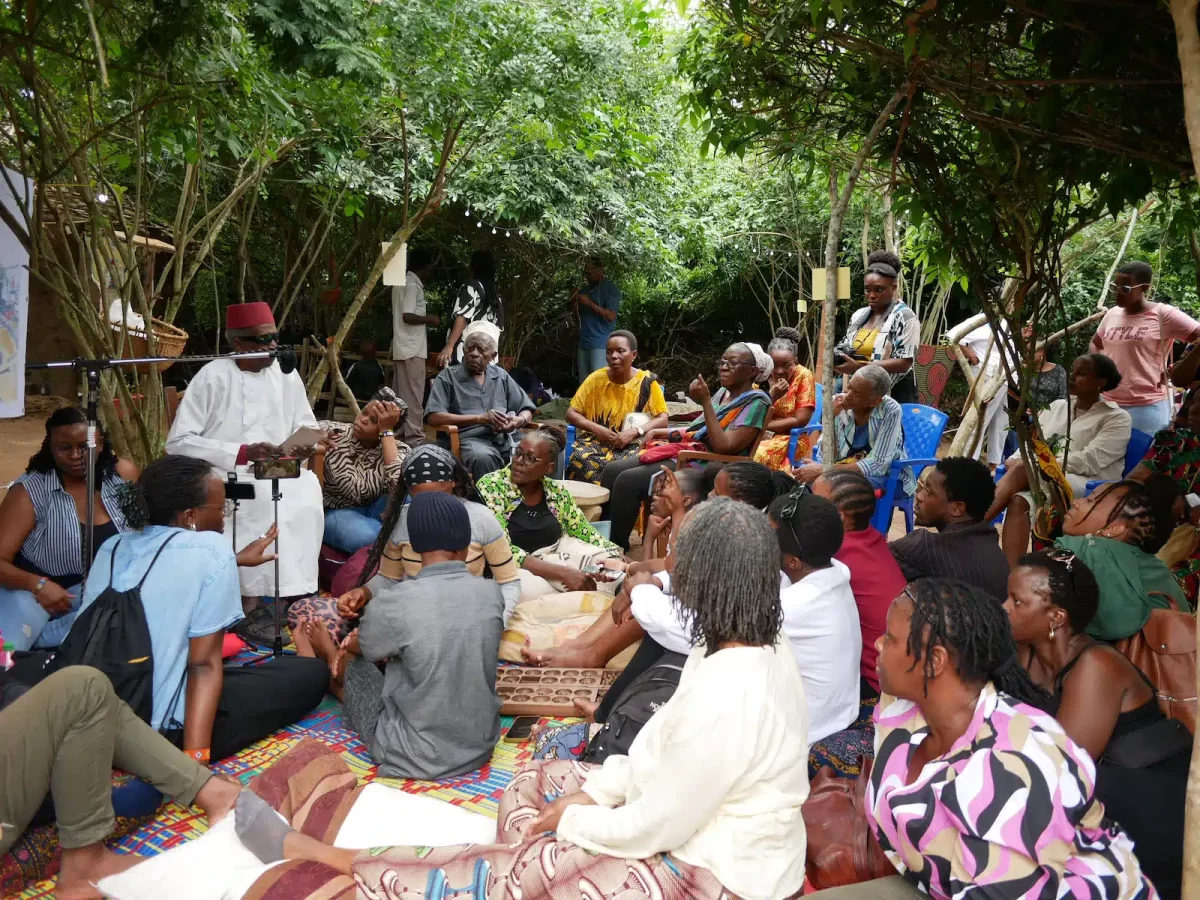
The intergenerational matriarchs from the workshop, alongside invited acclaimed figures like Mzee Amir Sudi Andanenga (a poet) and Vitali Maembe (a lyrical guitarist and activist musician), formed the heart of the storytelling hub. Collaborating with Mama Demere Kitunga, and Neema Komba, they created multimedia storytelling interventions within and around the structures.
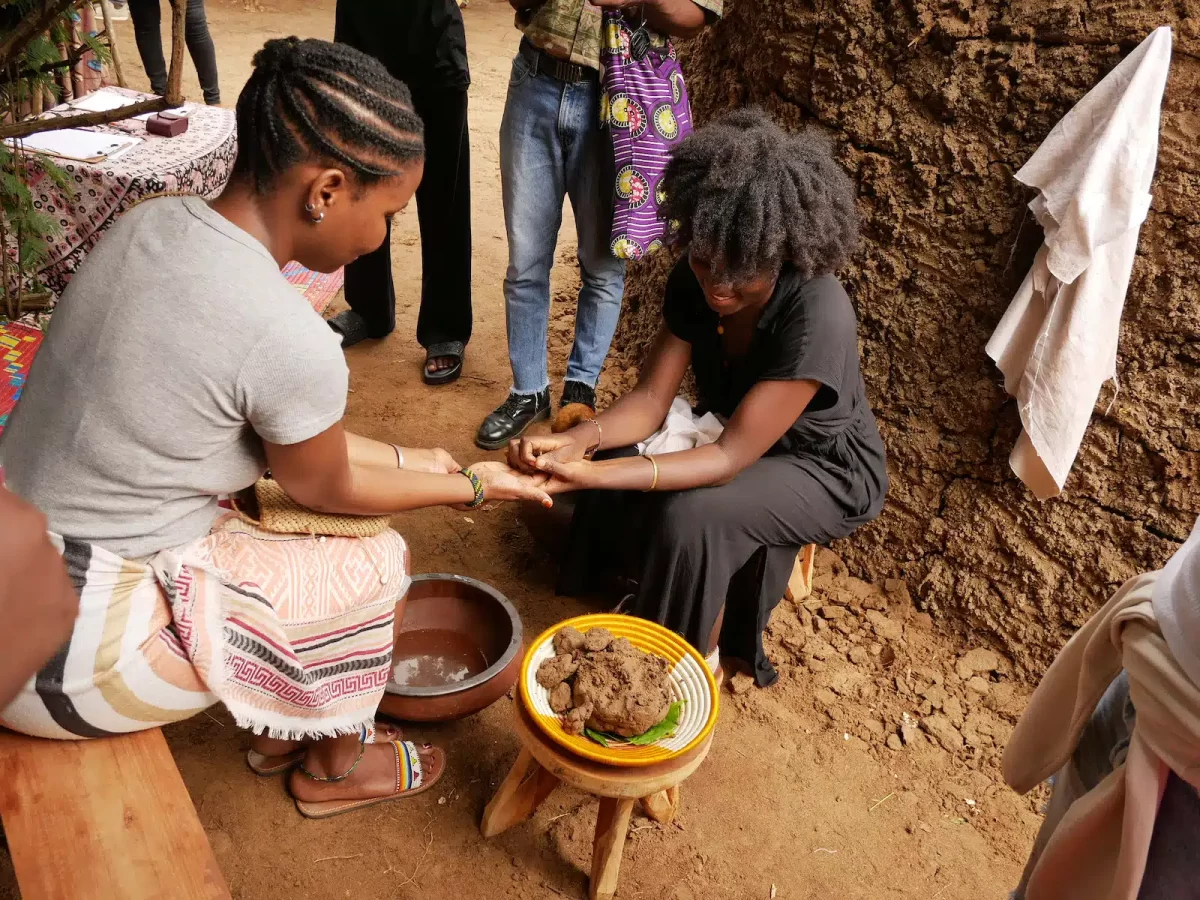
Artist interventions played a pivotal role in the public program. Mihayo Kallaye juxtaposed doilies from his grandmother’s house with thought-provoking texts and sound, sparking reflections on the impact of colonial conditioning on personal spaces and choices. Liberatha Alibalio’s performance, focusing on the relationship between humans and soil, resonated deeply, reminding us of the intrinsic connection between humanity and nature. Turakella Editha Gyindo’s exploration of cleanliness and its superficiality initiated thought-provoking conversations, questioning societal norms and cultural perceptions. Scalar Mapunda’s live building session exemplified the collaborative essence of the project, showcasing the tangible outcomes of shared creativity.
Jesse Gerald’s contribution, a text documentation of his involvement in the project, found a fitting place in the public program. Titled “Oxbow – A Meeting Point,” the text was a metaphorical exploration of encounters within spaces, echoing the project’s mission to cultivate and preserve intergenerational knowledge through constant nurturing and, more importantly, through a constant fight against forces of erasure. The zines collaboratively created by the project curators, artists, and other collaborators also formed part of the public program.
The public program also embraced live radio, featuring excerpts from the radio content produced throughout the entire project. This inclusion created an auditory tapestry, capturing the diverse voices and perspectives that had contributed to the project’s conceptual evolution.
VIII
Reflection II: We paused the sky
But how does one pause the sky?
It begins with conviction—a complete trust in the interconnection between people and the ecosystem,
including the universe. It entails a culture and spirituality that considers nature as animate, and the
realm of the present and the departed to be equally potent. These are phenomena that, for a world and
a people alienated from their belief systems, can be taken for granted.
It entails the performance of a ritual or manifestations of the ritual performed differently by different
peoples whose cultural unity spans the East African subregion, or more precisely, in this case, present day Tanzania.
Essentially, it is a delicate negotiation, deep respect, and an earnest quest to create space for harmony
between the living, the departed, and the surroundings that sustain life, including the elements making
up the universe.
The act of pausing the sky is a remarkable combination of the above—a phenomenon rooted in
indigenous traditions of the people of this region and deeply ingrained in their collective psyche through
received wisdom and memories handed down intergenerationally through stories, idioms, and rites of
passage.
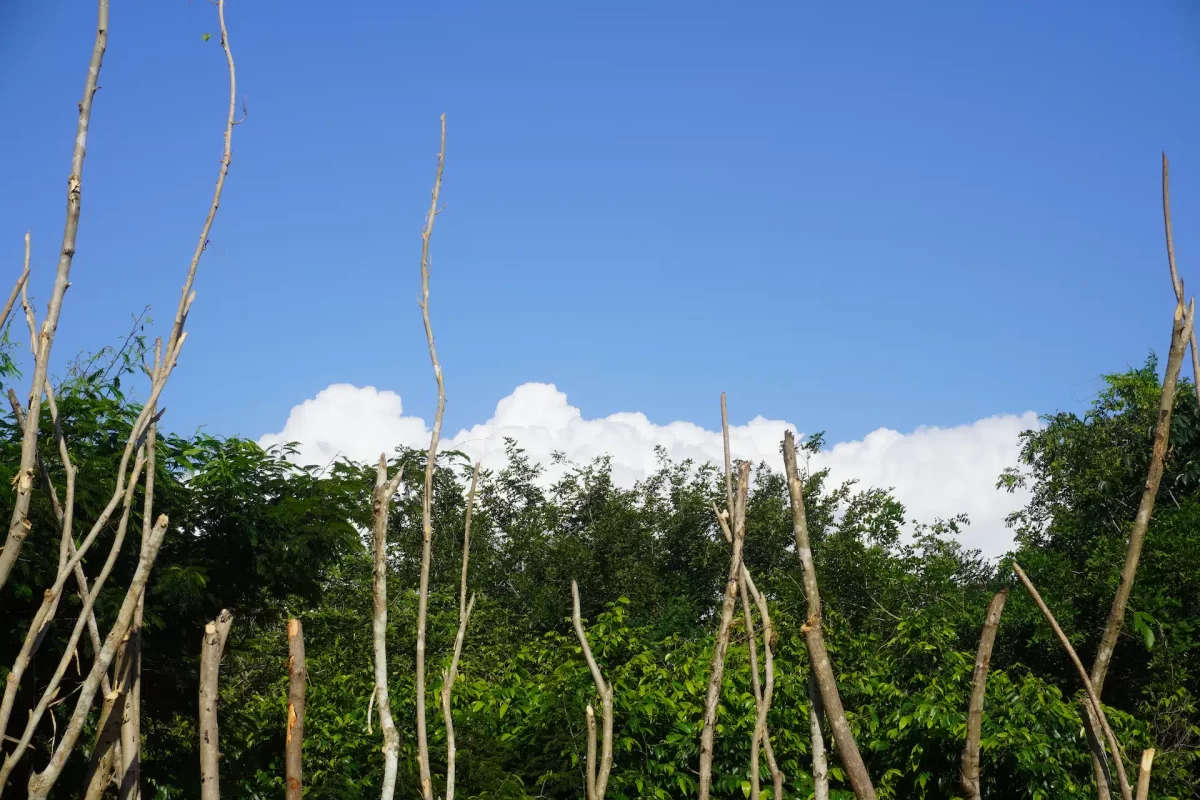
To perform the ritual, one must engage in a profound dialogue with the sky, asking rain clouds not to
release any rain when doing so would disrupt an event of social and cultural significance that cannot be
postponed. It represents a unique collaboration between humanity and nature, where they make room
for one another. The negotiation might sound like this: ‘Rain, we acknowledge your significance and
cherish your presence, yet today at this particular time, we kindly implore you to refrain from falling, as
we have a vital purpose to fulfill in this space.’ This purpose could encompass various events, such as
a wedding, a funeral, as sacred ritual, but is our case, it was an outdoor workshop immersed in nature.
To pause the sky, a specific role is entrusted solely to the youngest member of the family—the last born.
[The first and middle children have their own distinct responsibilities and rituals.] The last born may
either insert a knife or machete into the earth or tie a piece of banana bark around their wrist. There are,
of course, many other variants I am yet to learn. Once completed, the looming gray rain clouds disperse,
almost instantaneously, often localized within the radius of the space where the ‘purpose needs to be
fulfilled.’
During this pathway, the elements of the universe united to create room for us—not on one occasion
but throughout the weeks, whenever it was threatening to rain. The clouds, showers, and even heavy
raindrops would divert away from our path, only to return once we had achieved our purpose.
IX
Gratitude/Participants
Rehema Chachage (Project Curator)
Demere Kitunga (Project Co-Curator)
Upendo Chitinka (Project Assistant)
Paulina George Kabale ((Project Assistant – Logistics, Admin, Finance)
George ‘Scalar’ Mapunda (Project’s Technical/Building Consultant)
Sebastian John Chengula (Land custodian and project assistant)
Shamsi Kiruwasha (transport)
Karoli Leonce (Mapinga Resident – Project advisor)
Project Artists: Libratha Alibalio, Mihayo Kallaye, and Turakella Gyindo
Jenifer Msekwa, Margreth Liwamba, Irene Rugakingira, and Masoud
Kibwana (Other artists who applied to be part of the project)
Intergenerational Interlocutors (Workshops and Public Program): Mkunde
Aroni Mcharo, Marie Shaba, Amiri Sudi Andanenga
Vitali Maembe (Storytelling Hub – Public Program)
Neema Komba (Storytelling Hub co-curator – Public Program)
Rhoda Kambenga (Workshop Participant – Public Program Intervention)
Haikaeli Gilliard (Workshop Participant – Public Program Intervention)
Dorothy Mchatta (Image/Video Documentation Assistant)
Mussa Sango (Radio Documentation)
Jesse Gerald Mpango (Text Documentation)
Magreth Mmasy (Catering – Workshops and Public Program)
Nthupula Masipa (Yoga Hub – Public Program)
Jackal and the sun collective (collaborators, zine making workshop
facilitators, and documentation support): Suza Husse (Zine making), Renee
Mboya (documentation), Jenifer Kamau (storytelling hub), Anguezomo Mba
Bikoro, Michael Bader, Imani Chiara (documentation)
Keremba Warioba, Mkunde Chachage, Mugisha Basasingohe (Land coowners,
family, and advisors)
Chambi Chachage (family, Translation Support)